3 Parts of Your Pool That May Need Repairs
Almost every repair call comes down to one of three things on the equipment pad.
September 6, 2026 · 2 min read
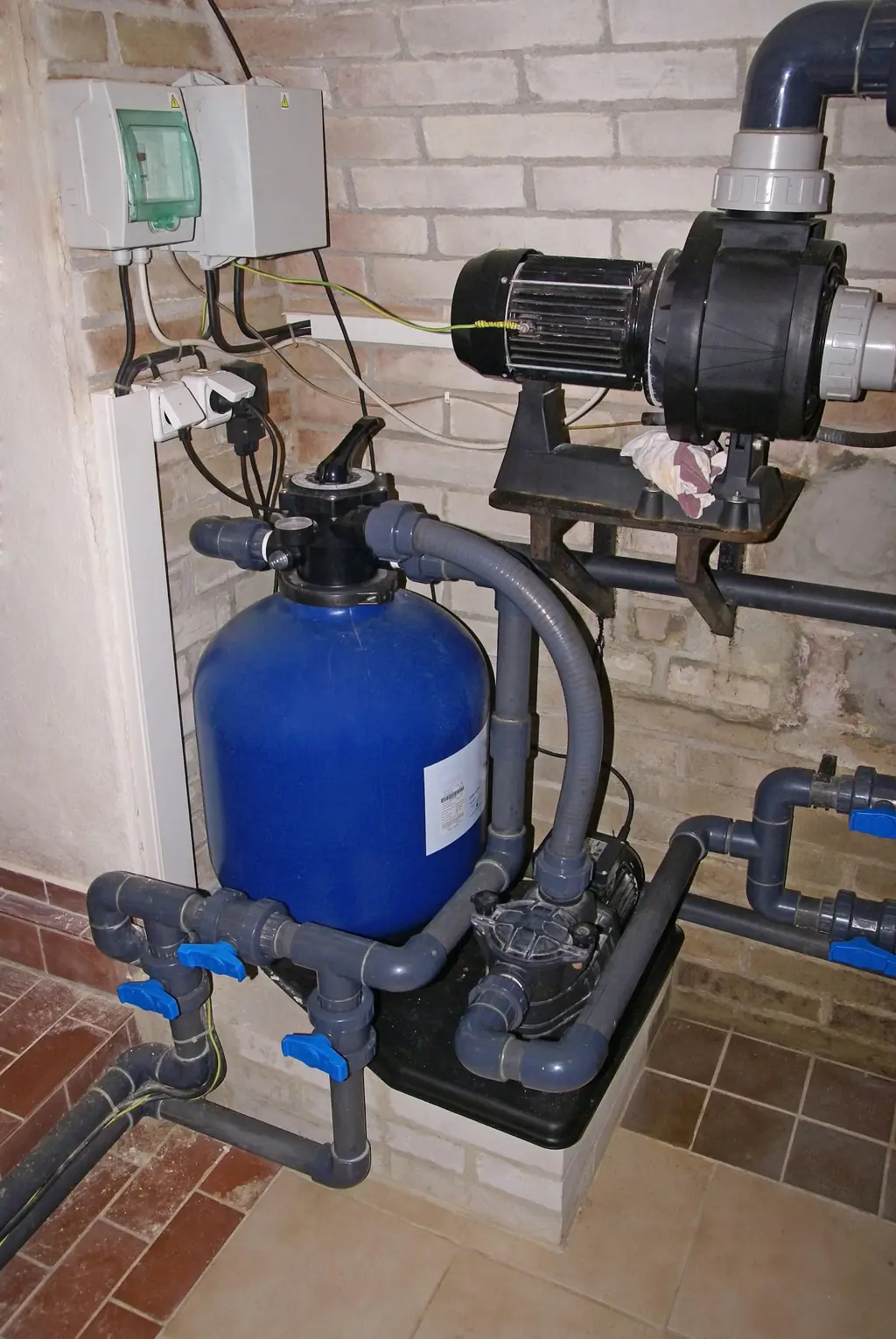
A swimming pool has a lot of components, but repair work concentrates heavily in three of them. Knowing what each one does, and what it sounds and looks like when it is failing, is most of what an owner needs.
1. The pump
The pump is the only thing making the water move. Everything downstream of it, filtration, heating, sanitizing, chemical distribution, depends on flow. When the pump degrades, every other system quietly degrades with it, which is why a pump fault so often shows up first as a water quality complaint rather than a mechanical one.
Listen for a change in pitch or a grinding note, which usually means bearings. Look for water on the pad under the motor, which usually means the shaft seal. A pump that has been running dry, even briefly, should be looked at immediately, because that is how a motor gets destroyed in an afternoon.
When a pump does need replacing, it is worth asking about variable speed. A VS FloPro can use up to ninety percent less energy than running a single speed motor flat out, because most of the time a pool does not need full flow. It needs turnover, and turnover achieved slowly over more hours is both quieter and dramatically cheaper to run.
2. The filter
Filters fail slowly and politely. A D.E. or cartridge filter with torn grids or collapsed cartridges will keep circulating water and keep passing dirt straight back into the pool. Nothing alarms. The pool just never quite gets clear, and the owner assumes the chemistry is off.
This is why filter service is a teardown rather than a rinse. Every grid or cartridge comes out and is hosed off, the O-rings are lubricated, anything that has gone is replaced, and it goes back together with fresh D.E. as needed. Price varies with the size of the filter.
Sand filters are their own case. Sand does not last forever. Over years the grains round off and the bed starts channeling, letting water take the path of least resistance straight through without filtering. The fix is to remove the old media, replace the laterals, add new sand and renew the O-rings. A tired sand bed cannot be backwashed back to health.
3. The heater
Heaters are the component people most often replace unnecessarily. Water that stays cold with a heater fitted is frequently not a broken heater at all. It is blocked pipework starving the unit of flow, or controls that have stopped calling for heat. A heater with insufficient flow through it will refuse to fire, which is a safety feature rather than a fault.
That is worth knowing before spending on a replacement. When a heater genuinely is finished, the Pentair MasterTemp is what we install: no pilot light, a small footprint, a digital temperature readout, and a rustproof plastic casing that survives being outdoors in Texas.
The pattern worth noticing
All three of these announce themselves early and quietly. A slightly louder pump, a pool that is not quite clearing, a heater that takes longer than it used to. None are dramatic, and all three are cheaper to address in that state than after the failure completes. That is the entire argument for the equipment inspection that happens on every maintenance visit.
Reed's Pool Service, (832) 725-3025
Call (832) 725-3025More articles
The Importance of Regular Pool Maintenance for a Safe and Clean Swim
Clear water and safe water are not the same thing, and only one of them you can see.
Pool Repair Services: What You Need to Know Before You Call
Five minutes at the equipment pad before you dial will usually save a visit.